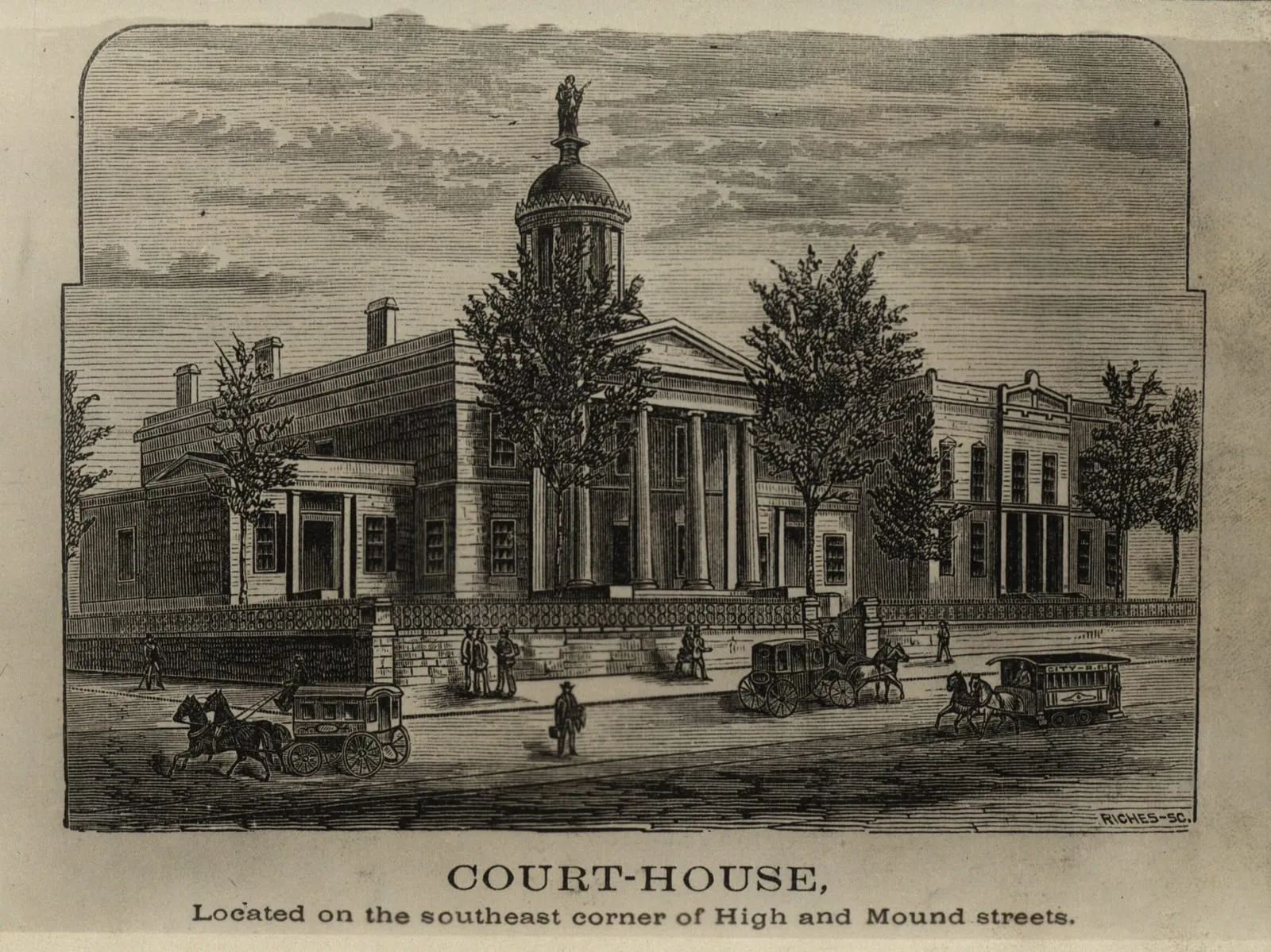

Small claims cases in Columbus and the rest of Franklin County go to the Small Claims Division of the Franklin County Municipal Court, at 375 S. High St. downtown, for money claims up to $6,000 [1][2]. For Ohio’s statewide rules, see BestOhio’s Ohio small claims court guide. This page walks through the case in this court, from the filing window to collecting.
At a glance
- Limit
- $6,000, not counting interest and court costs [2]
- File at
- Clerk's Civil Division, 3rd floor, 375 S. High St., 8 a.m. to 4 p.m. weekdays [1]
- Cost to file
- $92 plus service, since August 1, 2026 [3]
- Hearings
- Weekdays starting at 1:30 p.m., before a magistrate [1]
- Free help
- Self Help Center, 16th floor; mediation, 16th floor [1][6]
- Court's main number
- (614) 645-8214 [1]
Is this the right court?
The Small Claims Division hears claims for money only, up to $6,000 plus interest and costs. It can’t order someone to return property or finish a job, and it doesn’t hear libel, slander, malicious prosecution or abuse-of-process claims, or claims against the State of Ohio or the United States [2].
Franklin County is the proper place to sue if the incident or transaction happened in the county, or if the defendant lives in or regularly does business in Franklin County [2]. Only the person who is owed the money can file; you can’t sue to collect for someone else [2].
Who can speak in court. You can represent yourself or hire a lawyer. A partnership can appear through a general partner. A corporation can send a lawyer, a non-lawyer officer, or a salaried employee, but a non-lawyer can only testify about facts they know and present documents; they can’t question witnesses, argue the law, or file motions [2].
Filing your claim
- Fill out the complaint. Forms and instructions are on the court’s “Find My Form” page; there’s a handwritten version and an extra page if you need room [1][2]. Use each defendant’s full legal name. For a company, the Ohio Secretary of State’s records show its address or statutory agent [2].
- File the original plus 3 copies with the Civil Case Filing Cover Sheet at the Clerk’s Civil Division, 3rd floor, 375 S. High St., in person or by mail [2]. Mailing it? Include a stamped, self-addressed envelope to get your time-stamped copies back [2].
- Pay the costs, or ask for a waiver with an affidavit of indigency, which the duty judge approves [3].
| Item | Cost |
|---|---|
| Filing a small claims complaint (from Aug. 1, 2026) | $92 |
| Service by certified mail, each defendant or address | $10 |
| Personal or residence service, each | $25 |
| Sheriff service (elsewhere in Ohio) | $41 |
| Amended complaint or counterclaim | $20 plus service |
| Transfer to the general civil division | $35 |
| Objection to the magistrate's decision | $20 |
The small claims cost went up $6 on August 1, 2026 [4]. A case can’t go to trial until the defendant is served [5].
Changing your complaint. An amended complaint replaces the original. File and serve it at least 7 days before the court date; closer than that, you need the magistrate’s permission [2].
If you’re the one being sued
You don’t have to file a written answer before the court date [7]. You do need to show up: a defendant who misses the hearing risks a judgment against them [5][7]. Other options [7]:
- Counterclaim: if the plaintiff owes you, file a counterclaim at least 7 calendar days before trial; $20 plus service, up to $6,000.
- Transfer: a counterclaim over $6,000 moves the case to the general civil division. You can also ask to transfer by filing an affidavit that you have a good defense, at least 5 days before trial.
- New date: use the court’s continuance request form.
Getting a new date
Each side can ask for one continuance of up to 30 days. File a signed, written request with the Clerk’s Civil Division at least 10 days before the court date, listing the case number, the parties and the trial date and time, by fax to (614) 645-6919 or by mail. A request filed later, for longer, or a second request needs a magistrate’s approval, and second requests are generally granted only in exceptional circumstances [5].
Free mediation
The court’s Dispute Resolution/Mediation department, on the 16th floor, helps both sides reach a written agreement with a neutral mediator, privately [6]. You can ask for mediation before you file, with a pre-file mediation request, or during a case; a magistrate may also send you to mediation before trial [5][6]. If you get a mail notice of mediation, confirm it online or at 614-645-8576, or the office may not be able to reach or reschedule you [6]. Hours are weekdays 8 a.m. to 3 p.m. [6]
The hearing
Hearings run Monday to Friday starting at 1:30 p.m. before a magistrate; there’s no jury [1][2]. Check your case status in the Clerk’s online case search, arrive early, and check in with the courtroom bailiff [5].
- Bring receipts, canceled checks, estimates, contracts and photos, with the original plus a copy for each party and one for the magistrate [5].
- Witnesses must know the facts first-hand; a written statement from someone who isn’t there is hearsay and won’t be admitted. Written repair estimates are allowed to show your loss [5].
- Car damage? Prove you own or lease the car with the title or lease, and show the loss with two repair estimates, a paid repair bill, or a collision repair expert’s testimony [5].
- Subpoenas for unwilling witnesses must be requested at least 7 days before trial [5].
The plaintiff goes first and has to prove the claim by a preponderance of the evidence . If the plaintiff doesn’t show up, the case is dismissed [5].
After the decision
The magistrate mails a written decision; a judge reviews it and signs the judgment [5]. You can ask for detailed findings within 7 days, and either side can file objections within 14 days ($20). Objecting to the facts means buying the trial transcript, and filing objections pauses collection until a judge rules [5]. After the final judgment, an appeal goes to the Tenth District Court of Appeals within 30 days; the court suggests talking to a lawyer first [5].
Collecting what you win
A judgment doesn’t pay itself. If the other side won’t pay, the Clerk’s office has these tools [8][3]:
| Tool | When to use it | Cost |
|---|---|---|
| Wage garnishment | You know their employer; first mail a 15-day demand notice | $85 per employer |
| Bank account garnishment | You know their Ohio bank and account number | $40, plus a $1 check to the bank |
| Debtor examination | You don't know where they work or bank; they answer under oath | $5 plus service |
| Certificate of judgment (lien on real estate) | They own a home or land; the lien lasts 5 years | $10, plus Common Pleas and Recorder fees |
| Certificate of judgment to the BMV | Judgment from their negligent driving, 30+ days old; suspends their license | $10 |
A wage garnishment runs until the judgment is paid or for at least six months, and garnishments are paid in the order filed, so yours may wait behind others [8]. A judgment that sits five years without collection becomes dormant, but you can revive it within the next ten years [8]. Questions about collection forms: the Clerk’s Civil Division, (614) 645-7220 [8].
This guide is general information, not legal advice for your situation.
Sources
- Franklin County Municipal Court: Small Claims
- Franklin County Municipal Court: Small Claims Complaint FAQ
- Franklin County Municipal Court: Local Rule 13, Schedule 9.00, Costs and Fees
- Franklin County Municipal Court and Clerk: Case filing costs increase, effective August 1, 2026
- Franklin County Municipal Court: Small Claims Hearings and Trials
- Franklin County Municipal Court: Dispute Resolution/Mediation
- Franklin County Municipal Court: Respond to a Small Claims Lawsuit
- Franklin County Municipal Court: Collect a Small Claims Judgment
Next steps
ColumbusBest has a business relationship with these companies, and we may earn money if you use them. How we make money
Credit repair company
Credit Saint
If an old debt or another item on your credit report looks wrong, Credit Saint can help you challenge it with the credit bureaus.
You can also dispute errors yourself, for free, with Equifax, Experian and TransUnion. No company can legally remove accurate, timely information, and results vary.
Learn about Credit Saint →Free financial app
Bolster
Bolster is a free app for keeping an eye on your credit and building credit history over time.
Check the app's terms for any optional paid features.
See Bolster →Credit monitoring and credit builder
Credit Squad
Credit Squad watches your credit and identity and alerts you to changes. Its credit builder, included with every plan, reports your monthly payment to all three credit bureaus as an on-time installment payment.
Paid monthly subscription; see Credit Squad's site for current plans and terms. Credit building depends on on-time payments, and results vary.
See Credit Squad →Legal help by membership
LegalShield
LegalShield is a membership that gives you access to licensed attorneys for personal legal questions, like a landlord dispute, a small claims case or reviewing a document.
Monthly membership; what's covered depends on the plan and your state. We may earn a commission through our partner BestGuide.
See LegalShield plans →Common questions
Where do I file a small claims case in Columbus?
With the Franklin County Municipal Court Clerk's Civil Division, 3rd floor, 375 S. High St., Columbus, Monday to Friday, 8 a.m. to 4 p.m., in person or by mail. File the original complaint plus 3 copies and the filing cost. Franklin County is the right place if the incident or transaction happened there or the defendant lives or regularly does business there.
How much does it cost to file small claims in Franklin County?
$92 to file since August 1, 2026, plus service for each defendant: $10 by certified mail or $25 for personal or residence service. Sheriff service elsewhere in Ohio is $41. If you can't afford the costs, the court can waive them on an approved affidavit of indigency.
Do I have to file an answer to a small claims case in Franklin County?
No. The court says defendants don't need to take any action before the court date, but you should appear; if you don't, the magistrate may enter judgment against you. If you have your own claim against the plaintiff, file a counterclaim at least 7 days before trial; it costs $20 plus service.
How do I collect a small claims judgment in Franklin County?
If the other side doesn't pay, you can garnish wages ($85 per employer), attach a bank account ($40 plus $1 to the bank), have the debtor examined under oath about their assets, or record a certificate of judgment as a lien on their real estate, which lasts five years. Each step has its own forms at the Clerk's office.